Pages

Win Tickets to the Earthwell Festival

Win a pair of tickets to the Earthwell Festival, – Explore The Worlds of Wellness & Sustainability, August 25 & 26, 2012, Jordanelle State Park, Utah

Get the details here. 


I will be teaching about organic lawn care

Storing Your Harvest For the Short Term

Ideally you would harvest right before use but when that is not possible you need to know how to store your produce. In most cases the way produce is stored in the produce section of your grocery store is how you would store it at home. The wrong type of storage can reduce the time your harvest will last and may affect the flavor.
For short term storage:
 Continued

Fireweed


Fireweed (Epilobium angustifolium) is a tall, beautiful flowering perennial that is usually pink or magenta but sometimes white. Fireweed is a native wildflower in several states including Utah and Alaska.  This photo was taken in Seward, Alaska

The young shoots of Fireweed can be eaten raw or cooked and eaten like asparagus, and the young leaves can be used in salads.  In Alaska, Fireweed jelly and syrup can be purchased. 

Fireweed recipes

Fireweed seeds

Harvesting Fruits

The fruits I have harvested so far this season:

Strawberries
Rhubarb
Cherries - tart Montmorency
Gooseberries
Raspberries
Currants - black, red, white
Wolfberries - still ripening
Bush Cherries
Boysenberries
Blackberries

That is also the approximate order they were ripening.  Peaches will be ready soon.  The time of harvest partly depends on the variety you plant.  Apples and peaches can ripen over a wide time period.  For a longer harvest plant trees that ripen at various times.  Be sure to have a pollinator for the types you want to grow - especially for apples, sweet cherries, bush cherries, and pears. 

Blackberries
Bush Cherries

Edible Landscaping Ideas

This article from Organic Gardening magazine has a few great ideas to get you started with an edible landscape.

Chard in the landscape

4 Edible Landscaping Ideas

Introduce edible plants into your landscape.

Michael Seliga, owner of Cascadian Edible Landscapes shares his tips for introducing edible plants into your landscape.
 
Sneaking a few perennial edibles into your vegetable garden, and even your ornamental borders, cuts down on work and increases the amount of food you can harvest.

Start with herbs. "Herbs are expensive to buy at the store," Seliga says. "So adding them to your landscape makes good economic sense." Reserve a small section of your vegetable garden for herbs or integrate them into your landscape. Rosemary, sages, thymes, winter savory, basils, and oregano all blend in well with flowering perennials.
Plant fruiting shrubs. Blueberries, currants, and elderberries...

Read more

Tabletop Square Foot Garden

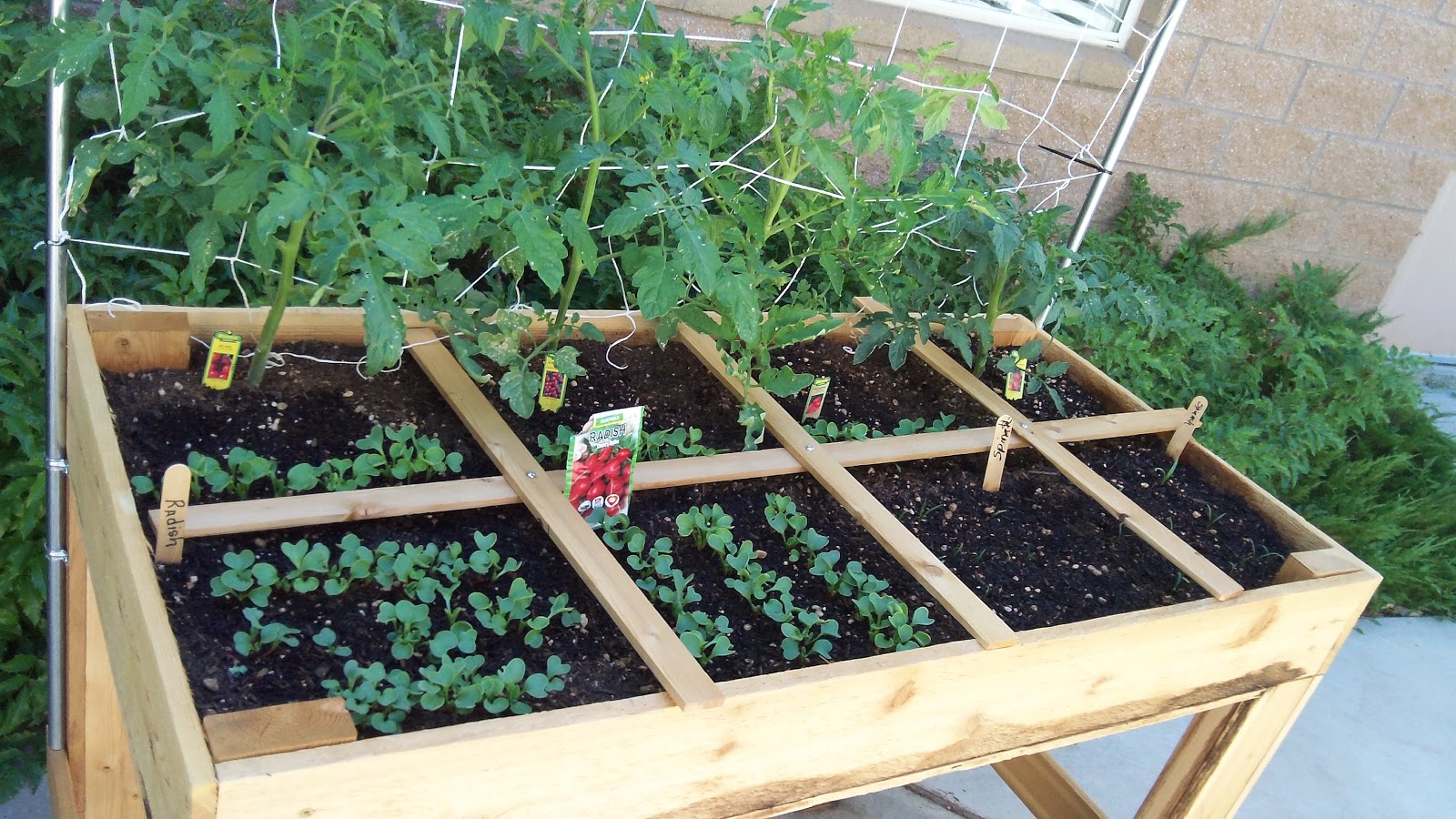
Recently I taught a Square Foot Gardening class at a local assisted living center and then I helped install two tabletop style Square Foot Gardens.   The tabletop gardens were built and transported by associates from the local Home Depot (Centerville, Utah).  Some residents may return to their homes and hopefully this will give them some ideas for a way they could continue to garden. 
Residents planted tomato plants


About ten days later - after residents planted seeds
 The residents helped plant tomato plants and later planted several vegetables from seeds including beans, peas, spinach, and radishes.


Tabletop Square Foot Gardening is a great way to garden for those lacking ground space or those who are not able to get down to ground level to garden. 

This is a great way to garden on a patio!  Casters can be added to the legs for those who would like to move their box around on a patio or other smooth surface.

Cool Weather Plants

Cool spring weather is a great time to plant peas, lettuce, spinach, cilantro, cabbage, onions, radishes, carrots, beets, arugula, and potatoes.  Most leafy vegetables or root vegetables can be planted 8 weeks or more before your last average frost date. 

Early spring is also a great time to plant fruit trees, berry bushes, strawberries and most other fruiting plants. 

Even if you get some snow all these plants should come through it just fine.

 Below:
Arugula, cabbage, and onions in my portable 2' x 2' Square Foot Garden.  I take this garden with me to Square Foot Gardening classes
Peas in my on-the-ground Square Foot Garden
Spinach just coming up in my on-the-ground Square Foot Garden
All of these planted in March, made it through at least two snows and some rain just fine.


Peas, spinach, lettuce, arugula, and cilantro can also be planted about 6 weeks before the first fall frost.  As weather begins to cool in the fall, temperatures are again at the levels these plants prefer and it is likely you will be able to harvest a fall crop.

Edible Landscaping In The News

Edible landscaping is becoming better known and in the news more frequently.  Below are some recent news reports.  It isn't that edible landscaping is new but due to concern about the economy, the environment, food safety, and the desire to become more self sufficient the idea of using edible plants in the landscape is gaining popularity.  Edible landscaping once was the usual way of creating a landscape.

Plymouth Daily News

Seattle Times

Farm Carolina

Fox News

U-TSan Diego 

Pink Panda Strawberry

Produce In Season

Use this interactive map to find when specific fruits and vegetables are in season in your area.


What Fruits and Veggies Are In Season? Courtesy of WEBstaurant Restaurant Supplies