Pages

Tabletop Square Foot Garden

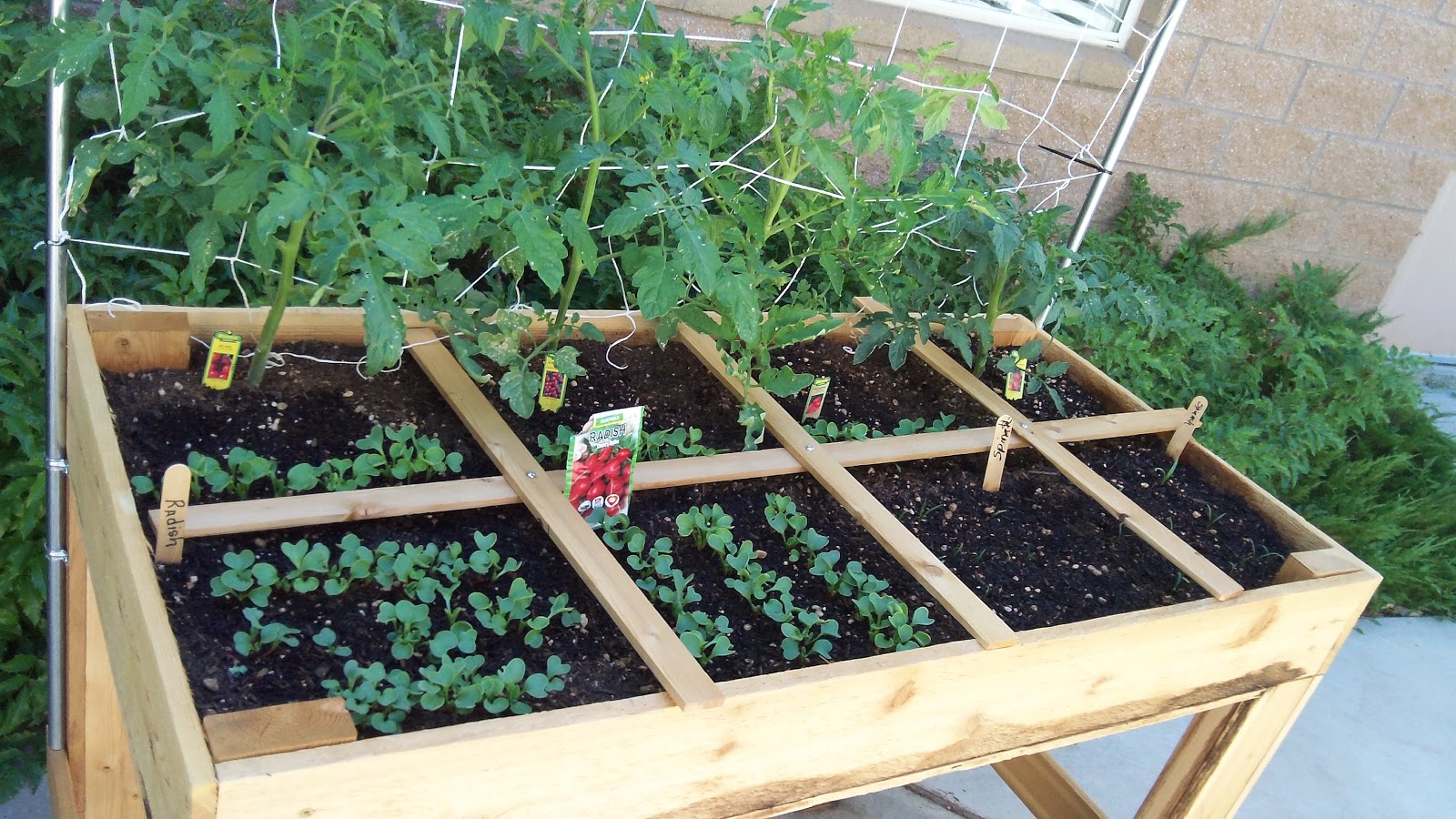
Recently I taught a Square Foot Gardening class at a local assisted living center and then I helped install two tabletop style Square Foot Gardens.   The tabletop gardens were built and transported by associates from the local Home Depot (Centerville, Utah).  Some residents may return to their homes and hopefully this will give them some ideas for a way they could continue to garden. 
Residents planted tomato plants


About ten days later - after residents planted seeds
 The residents helped plant tomato plants and later planted several vegetables from seeds including beans, peas, spinach, and radishes.


Tabletop Square Foot Gardening is a great way to garden for those lacking ground space or those who are not able to get down to ground level to garden. 

This is a great way to garden on a patio!  Casters can be added to the legs for those who would like to move their box around on a patio or other smooth surface.

Cool Weather Plants

Cool spring weather is a great time to plant peas, lettuce, spinach, cilantro, cabbage, onions, radishes, carrots, beets, arugula, and potatoes.  Most leafy vegetables or root vegetables can be planted 8 weeks or more before your last average frost date. 

Early spring is also a great time to plant fruit trees, berry bushes, strawberries and most other fruiting plants. 

Even if you get some snow all these plants should come through it just fine.

 Below:
Arugula, cabbage, and onions in my portable 2' x 2' Square Foot Garden.  I take this garden with me to Square Foot Gardening classes
Peas in my on-the-ground Square Foot Garden
Spinach just coming up in my on-the-ground Square Foot Garden
All of these planted in March, made it through at least two snows and some rain just fine.


Peas, spinach, lettuce, arugula, and cilantro can also be planted about 6 weeks before the first fall frost.  As weather begins to cool in the fall, temperatures are again at the levels these plants prefer and it is likely you will be able to harvest a fall crop.

Edible Landscaping In The News

Edible landscaping is becoming better known and in the news more frequently.  Below are some recent news reports.  It isn't that edible landscaping is new but due to concern about the economy, the environment, food safety, and the desire to become more self sufficient the idea of using edible plants in the landscape is gaining popularity.  Edible landscaping once was the usual way of creating a landscape.

Plymouth Daily News

Seattle Times

Farm Carolina

Fox News

U-TSan Diego 

Pink Panda Strawberry

Produce In Season

Use this interactive map to find when specific fruits and vegetables are in season in your area.


What Fruits and Veggies Are In Season? Courtesy of WEBstaurant Restaurant Supplies


Unusual Edibles

One purpose of this blog is to introduce you to some of the more unusual edible vegetables, fruits, and herbs.  Although the vegetables mentioned in this article are ones you have likely heard of you may not have grown or eaten them.

Explore some of the less common edibles - first buy purchasing a few at a farmer's market, grocery store, or health food store or see if you can get some from a friend or neighbor. Keep in mind that your home grown version will probably taste even better.   For those edibles which are easier to grow or harder to find grow just a few to try.  Try the fruit, vegetable, or herb a few different ways - cooked or raw (if both are options) and prepared in different ways.  Even a small amount can give you some idea what you think.

Hope you enjoy the article and get inspired to grow something new.

                                           Go Boldly

By Tomese Buthod
Photos by E.S. Bruhmann

I
try to be a seasonal locavore, almost to a fault. I love saying that I’ll eat anything — the more obscure, the better. But as much as I love food of all kinds and while I pride myself on being an adventurous eater, in the past few years I’ve had to face the fact that I still have a few kid-like suspicions of “weird food.” .....


Harvested My First Grapefruit

You may think it is not possible to grow fruit indoors.   I just harvested my first grapefruit from a tree that I have had for about two years.  In my zone 6 yard I have to keep it indoors most of the year.
My key lime produced for the first time and I have picked lemons from my lemon tree.  One of my lemon trees was purchased two years ago the other one I have had for many years and have moved from Utah to Alaska and back again.

Save Money On Healthy Foods

The article  The Twenty Healthiest Foods for Under $1 from Divine Caroline has a list of healthy foods to help you eat healthy while saving money on your grocery budget.  Imagine how much you could save if you grew them yourself.  

Depending on the amount of land you have it may be difficult to grow enough oats for your use.  Purchasing in bulk for storage would save you even more.   If you are in an area that allows chickens you can produce your own eggs.  Potatoes, kale, apples, and broccoli should not be much of a problem for most people.  Apple trees can be purchased in a variety of sizes including columnar and dwarf to save space.  Be sure to get two for pollination or you may not get a crop.  Some variety of nuts can be grown in most climates. Depending on your climate you may or may not be able to grow bananas outdoors.   Bananas can be grown as a houseplant - be sure to purchase a plant that produces edible bananas and be willing to wait about 18 months to harvest.  Beans can also be grown in most climates and also store very well. Beans can also be sprouted for eating. 

Of course if you are growing your own food you can save money growing a much wider variety than this.  Add foods in a variety of colors to get the most range of nutrients - tomatoes, peppers, and berries are all colorful and fairly easy to grow.  And don't forget herbs which can add interest and nutrients. 

Gifts for Gardeners

Need ideas for gifts for gardeners (or for you)?

Some possibilities could be tools, indoor plants (what about a Vanilla vine?), seeds, seed starting supplies, catalogs, books, magazines or ezines, plant markers, books, or ebooks.

Not only gardening tools but what about tools for preserving, storing, or using the harvest?

Compile a list of resources as a gift including websites, forums, elists, and more. I hope you would include some of my resources in your list including Garden Inspire, EatYourLandscape, and HerbLinks

For more ideas check this article and this site

What are your ideas?

Think It Is Too Early To Plan Your Landscape?

Now is a great time to think about your landscape and garden for next year.  What vegetable, herbs, and fruits do you and your family consume? Which of these grow in your area and could be used in place of trees, shrubs, perennials, and annuals in your landscape?

Time to plan for 2012’s harvest

BY LEE ESTERLY RICHTER
SPECIAL TO THE BLADE (Toledo Blade)

It’s almost the time of year when many of us are harvesting the last of our homegrown produce for 2011.

Here it is the middle of September already, and it’s time to start planning next year’s garden. More and more gardeners in northwest Ohio are considering edible landscaping which incorporates fruits, vegetables, and nuts into typical landscaping plans.

Edible landscaping offers an alternative to conventional residential landscapes that are designed solely for ornamental purposes. The edible versions can be just as attractive, yet produce fruits and vegetables for home use.

There are many reasons to incorporate edible plants into the residential landscape, including:

•The freshness and flavor of home-grown, fully ripened fruits and vegetables.
•Controlling the quantity and kind of pesticides and herbicides used on the foods you consume.
•Increasing the food security of your household.
•To save on grocery bills.
•Growing unusual varieties not available in stores
•To get outside, interact with the natural world, and have fun.

Edible landscaping is as old as gardening itself and has undergone a recent revival. Ancient Persian gardens combined edible and ornamental plants. Medieval monastic gardens included fruits, vegetables, flowers, and medicinal herbs. Plans for 19th century English suburban yards, which modeled themselves after country estates, often included fruits, and berries.

The edible components of residential landscapes largely were lost in this country to shade trees, lawns, and foundation plantings. In the past two decades, however, there has been a revival of interest in edible landscaping.

Like all plants used in the landscape, edible plants grow best in certain conditions. Many (but not all) fruits and vegetables do best where they receive at least six hours of full sunlight a day. Most also like well-drained soil. Parts of your yard that satisfy these conditions are good places to start an edible landscape.

To start simply, consider a one-for-one substitution. Where you might have planted a shade tree, plant a fruit tree. Where you need a deciduous shrub, plant a currant or hazelnut. Where you have always had chrysanthemums, plant bachelor’s buttons—you can eat them.

Edible plants come in nearly all shapes and sizes and can perform the same landscape functions as ornamental plants.

Many common ornamental plants can survive with minimal care. Most edible plants, however, require a certain amount of attention to produce well. They might require a little extra watering, pruning, fertilizing, or pest management. The time required, however, need not be exorbitant.

To care for a fruit tree, for instance, might take only a few hours a year, while the yield could be enormous. It is best to treat edible landscaping as a hobby and not a chore. You might find yourself checking on your plants more than required, just because you want to see how they’re doing. If you are concerned about being overwhelmed, just start small.

The possibilities for edible landscaping are endless. By incorporating just one—or many—edible plants into a home landscape, you can develop a new relationship with your yard and the food you eat.